THE SENSE OF BEAUTY SUMMARY | KEY TAKEAWAYS FROM GEORGE SANTAYANA
There are books that answer questions. And there are books that change the questions you were asking. The Sense of Beauty, published in 1896 by the Spanish-American philosopher George Santayana, belongs in the second category. It is not a long book. It does not require a philosophy degree to read. But it carries within it one of the most quietly destabilizing ideas in the history of aesthetic thought: that beauty is not out there in the world waiting to be discovered. It is something the human being creates, projects, and inhabits. And once you understand what Santayana means by that, you cannot look at a painting, a landscape, a face, or a room the same way again.
The book began as a series of lectures delivered at Harvard University, where Santayana taught philosophy in the 1890s alongside William James and Josiah Royce. It was, in part, written to secure his academic position. What it produced instead was a foundational text of American aesthetics that remains in print and in use more than a century later, because the questions it addresses have not dated by a single year.
Why do some things move us and others leave us unmoved? What is actually happening when we call something beautiful? Is beauty a truth about the world or a truth about ourselves? And what does it mean for a life well-lived that beauty exists at all?
These are the questions The Sense of Beauty sets out to answer. The answers are not simple. But they are extraordinarily clarifying.
The Book
Santayana structures The Sense of Beauty in four parts: the nature of beauty, the materials of beauty, form, and expression. Each section builds on the last, moving from the philosophical foundations of what beauty is through the specific sensory, structural, and emotional dimensions through which it is experienced.
Santayana writes in a prose style that is itself a form of the argument he is making. His sentences are precise without being cold, philosophical without being inaccessible. He has what few academic philosophers possess: a genuine literary sensibility that makes the reading of his ideas pleasurable in a way that mirrors the subject matter. This is not accidental. It is consistent with a philosopher who believed that beauty was one of the most serious and irreplaceable dimensions of human life.
Beauty as Objectified Pleasure
The central and most famous concept of the book is Santayana's definition of beauty as objectified pleasure.
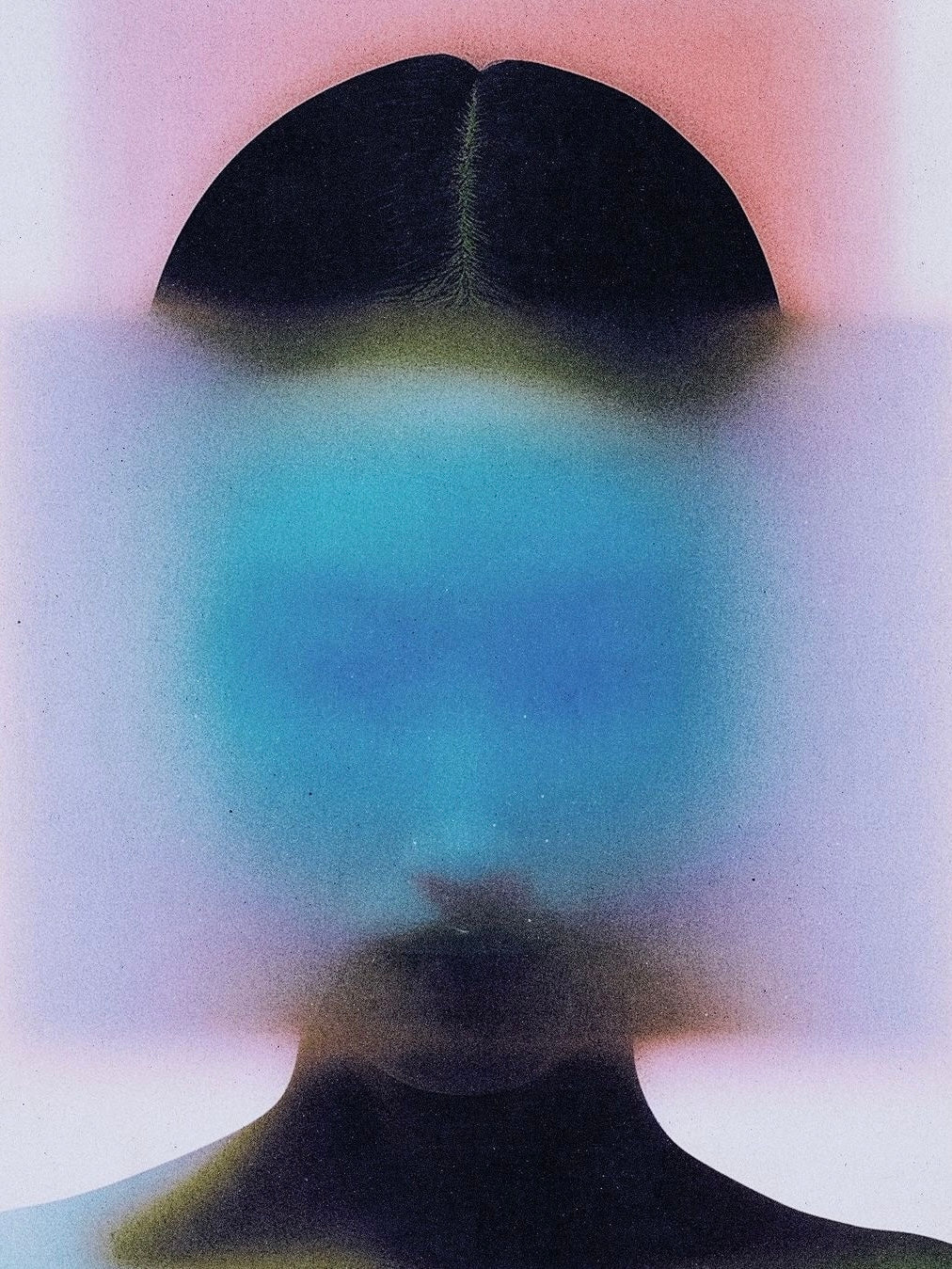
This is not as simple as it sounds. Santayana is not saying that beauty is merely subjective, that it is whatever someone happens to enjoy. He is making a more precise and more interesting claim. When we experience pleasure, we normally understand it as something happening inside us. We feel warm. We feel satisfied. The pleasure is registered as a state of the self. But when we experience beauty, something different happens. The pleasure does not feel like it is ours. It feels like it belongs to the object. We do not think: this painting is causing me pleasure. We think: this painting is beautiful. The quality seems to reside in the thing itself rather than in our response to it.
Santayana's insight is that this projection is exactly what is happening, and that it is neither a mistake nor an illusion. It is the defining characteristic of aesthetic experience. Beauty is pleasure objectified, meaning pleasure that has been so fully absorbed into the perception of an object that it can no longer be distinguished from the object itself. The rose does not have beauty the way it has petals. But neither is the beauty simply in the eye of the beholder in the dismissive way that phrase usually implies. The beauty is in the relationship, in the meeting of a particular sensory object with a particular capacity for pleasure in the perceiving subject.
This distinction matters enormously. It explains why beauty feels like a discovery rather than a preference. It explains why we argue about it with such conviction, as if we were pointing to a fact about the world rather than reporting an internal state. And it explains why the experience of beauty can feel so impersonal and so intimate simultaneously.
The Nature of Aesthetic Pleasure
Santayana is careful to distinguish aesthetic pleasure from other forms of pleasure. Not all pleasure produces the experience of beauty. The pleasure of eating when you are hungry is real and immediate, but it is not typically experienced as beauty. The pleasure of scratching an itch resolves a discomfort but does not generate an aesthetic response.
What distinguishes aesthetic pleasure, in Santayana's account, is that it is intrinsic rather than instrumental. It is pleasure taken in something for its own sake, without reference to its utility, its moral implications, or what it might lead to. It is the pleasure of pure perception, of attending to something fully in the present moment without wanting anything from it beyond the experience itself.
This is why Santayana draws an analogy between aesthetics and play. Work is instrumental. It is done for something beyond itself. Play is done for its own sake, for the pleasure inherent in the activity. Aesthetic experience is the perceptual equivalent of play: attention freed from practical purpose, given over entirely to the quality of the experience in the present moment. This is also why beauty and moral utility are not the same thing, and why Santayana insists on keeping them clearly separate. A painting can be beautiful and morally neutral. A morally admirable action can be deeply unpleasant to witness. The categories are distinct, and confusing them produces muddy thinking about both.
The Materials of Beauty
The second section of the book examines the sensory foundations of aesthetic experience. Santayana argues that all beauty begins in sensation, in the raw material provided by the senses, primarily sight, sound, and the more diffuse sensations associated with touch and movement.
But not all sensations are equally suited to aesthetic experience. Santayana observes that the senses most capable of sustaining aesthetic pleasure are those that allow for distance and contemplation, primarily sight and hearing, rather than those bound to immediate bodily need and satisfaction, primarily taste, smell, and touch. This is not because taste and smell cannot be beautiful but because they are more immediately tied to biological function in ways that make pure contemplative attention more difficult to maintain. The smell of food is harder to experience aesthetically when you are hungry. The beauty of a sound is accessible even when no other need is pressing.
The section also examines what Santayana calls the aesthetic value of sensory qualities themselves, the intrinsic pleasure of certain colors, tones, textures, and rhythms before they are organized into more complex forms. A pure color can be beautiful in isolation. A single sustained musical note can carry beauty. These simple materials are the foundation on which more complex aesthetic experiences are built, and Santayana argues that attention to them is the beginning of aesthetic education.
Form as the Architecture of Beauty
The third section, on form, is the most philosophically dense and in some ways the most enduring contribution of the book. Santayana argues that the experience of beauty is not simply the enjoyment of pleasant sensory material. It involves the perception of form: the way elements are organized, related, and structured in relation to each other and to the whole.
Form produces beauty when it creates unity out of diversity, when the many parts of a work or an object or a landscape resolve into something that feels whole, inevitable, and complete. This resolution is not arbitrary. It corresponds to deep patterns in human perception and cognition. The brain is organized to seek pattern, coherence, and resolution. When an aesthetic object provides these things in a way that engages but does not overwhelm the perceiving mind, the result is the particular pleasure associated with form: the pleasure of order felt rather than analyzed.
Santayana discusses symmetry, proportion, rhythm, and balance as formal elements that produce aesthetic pleasure across cultures and art forms. But he is careful not to reduce beauty to any formula. Form that is too perfectly symmetrical can feel mechanical. Proportion that is too exact can feel dead. The beauty of form involves the interplay between expectation and variation, between the pattern the mind anticipates and the way the work fulfills or subtly departs from that anticipation.
This section resonates far beyond the analysis of art. It speaks to why certain spaces feel right and others feel wrong. Why certain faces hold attention. Why certain sentences land and others do not. Form is operating everywhere in human experience, and its operation is central to whether the experience is aesthetically alive or inert.
Expression as the Deepest Dimension of Beauty
The fourth section, on expression, is the one that most directly addresses what it feels like to be genuinely moved by something beautiful, and it is where Santayana makes his most original contribution.
Expression, in Santayana's framework, is the capacity of a perceptual object to carry meanings, emotions, and associations beyond its immediate sensory qualities. A face is not simply a configuration of features. It expresses character, history, feeling, and life. A piece of music is not simply a sequence of tones. It expresses something about human experience that cannot be stated in any other medium. A landscape is not simply a collection of visual elements. It expresses something about time, mortality, grandeur, or peace that no description captures.
Expression is what transforms beauty from a pleasant sensation into something that feels significant. It is why certain works of art produce not just pleasure but something closer to recognition, the feeling of seeing something true and important that you did not have words for before the work gave them to you. It is why beauty can console, as Santayana writes, even in tragedy. Even an experience of loss or suffering, when given expressive form in art, is transformed into something that carries meaning and can be held rather than simply endured.
Santayana argues that expression works through association. The emotional overtones of an aesthetic object come from its relationships with other experiences in the perceiver's life, other artworks, memories, feelings, and ideas that the object activates and organizes into a new configuration. This is why the same piece of music can mean something entirely different to two people, and why the same work can mean something different to the same person at different points in their life. Expression is not fixed in the object. It emerges from the encounter between the object and a particular perceiving consciousness at a particular moment.
Why Beauty Is Not a Luxury
Woven through all four sections of the book is a claim that Santayana never states as bluntly as it deserves: beauty is not an optional extra in human life. It is not decoration or indulgence. It is one of the primary means by which human beings make contact with what is most valuable in experience.
A life without beauty is not simply a less pleasant life. It is a diminished life in a more fundamental sense. Because beauty, in Santayana's account, is what happens when the human capacity for pleasure becomes fully engaged with the world. It is the form that life takes when it is being lived, not merely survived. It is what remains when utility, duty, and anxiety are set aside and pure attention is given to the quality of experience in the present moment.
This is why the cultivation of aesthetic sensibility is, for Santayana, a form of ethical seriousness. The person who has developed the capacity to perceive beauty fully, in art, in nature, in human faces and voices and gestures, is the person who has developed the capacity to be fully present to the richness of existence. That capacity is not trivial. It is one of the deepest things a human being can cultivate.
What The Sense of Beauty Is Really About
Beneath the philosophy and the close analysis, The Sense of Beauty is a book about attention. About what becomes available when you stop moving through the world instrumentally, extracting from it what you need, and start moving through it perceptually, receiving what it is actually offering.
Santayana was writing at a moment when industrialization was reordering human life around function, production, and utility. His argument was that something irreplaceable was at risk of being lost in that reorganization: the human being's capacity to find the world intrinsically worthy of attention, to feel pleasure in the sheer fact of existing within a world that is, in so many of its moments and dimensions, genuinely beautiful.
That argument has not aged. If anything, it has become more urgent. We live in an environment now organized almost entirely around attention capture, efficiency, and output. The contemplative, useless, intrinsically valuable experience of beauty is in shorter supply than it has ever been. And the cost of that scarcity, Santayana would argue, is not aesthetic. It is human.
The Key Themes
Beauty Is Objectified Pleasure: Beauty is not a property of objects independent of human perception, nor is it merely a subjective preference. It is pleasure so fully merged with the perception of an object that it feels like a quality of the object itself. This is the most precise and most useful definition of beauty in the philosophical tradition.
Aesthetic Experience Is Intrinsically Valuable: The pleasure of beauty is not a means to anything else. It is its own end. This distinguishes it from practical pleasure and gives it a dignity and seriousness that the utilitarian reduction of all value to function cannot account for.
Form Produces the Feeling of Rightness: The organization of elements into a coherent, resonant whole is the source of one of the deepest forms of aesthetic pleasure. Form is operating everywhere in human experience, from music and painting to architecture, language, and the human face.
Expression Transforms Beauty into Meaning: The deepest aesthetic experiences are those in which an object carries emotional and intellectual overtones that resonate with the perceiver's own experience. Expression is what makes beauty significant rather than merely pleasant.
The Cultivation of Beauty Is a Serious Human Practice: Developing the capacity to perceive beauty fully is not a luxury. It is one of the most important things a human being can do, because it is the cultivation of the capacity to be fully present to the richness of existence.
A Note on the Reader
The Sense of Beauty was written in 1896 and the language reflects its time. Some readers will find Santayana's prose elegant and his ideas immediately accessible. Others may find the philosophical vocabulary more demanding than the book's relatively modest length suggests. It rewards slow reading. The ideas are compressed rather than simple, and many of the most significant passages are in single sentences that deserve to be read more than once.
It is also worth noting that Santayana was writing before the major developments of twentieth-century aesthetics, including formalism, conceptual art, and the institutional theory of art, that have complicated many of his specific claims about form and expression. The framework he provides is foundational rather than final. It is most valuable as a starting point for thinking about beauty rather than a definitive account of it.
Final Thoughts
More than a century after its publication, The Sense of Beauty remains in print because the question at its center has not been answered more satisfyingly anywhere else. What is beauty? Why does it matter? What are we doing when we seek it, make it, and are moved by it?
Santayana's answer, in its simplest form, is this: beauty is what happens when human pleasure and the world meet in a moment of full attention. That meeting is one of the few experiences that feels genuinely complete in itself. And a life organized to make room for it is, by that measure alone, a richer life than one that does not.
The sense of beauty is not an aesthetic refinement. It is a way of being in the world. And it is, as Santayana spent his entire career arguing, one of the most serious things a human being can develop.

BY Self Maximized